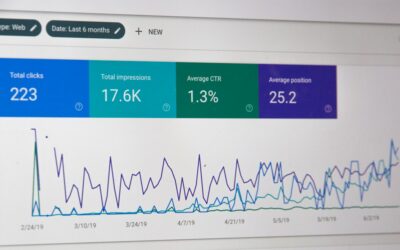

If your blog is busy but your pipeline is not, you do not have a content problem—you have a measurement and execution problem. The fix is not “more posts.” It is automation that converts: a system that targets buyer intent, publishes at scale, and ties every article to tracked conversions and ROI. That is exactly what Aithor delivers: a fully automated blog for WordPress that analyzes competitors and SERPs, generates human-sounding SEO content, auto-publishes, builds internal links, and shows traffic, clicks, and revenue in one dashboard.
This is how to turn WordPress blogging into a measurable growth engine using automation that is built for outcomes—calls, bookings, carts, and checkouts—not vanity traffic.
Why “automation that converts” beats “more posts”
Publishing volume alone will not move revenue. Output only matters when each article is wired to a conversion and you can see ROI per post. Aithor’s Automated Blog Platform uses automation to tie content to outcomes: goals are defined upfront, CTAs are embedded contextually, and conversions are tracked natively in the ROI dashboard. You get compounding reach without the manual work, and you know which topics actually generate revenue.
With automation that converts, you replace guesswork with feedback loops. The platform learns from live performance—SERP position, CTR, time on page, and conversion data—so the next batch of posts doubles down on what works and avoids what does not.
Define the conversion you’ll scale

Before the first post ships, lock the business action you want more of. Clear goals make automation accountable. In WordPress, Aithor can track conversions such as:
- Form fills (contact, quote, demo)
- Click-to-call and tap-to-text events
- Booking and appointment confirmations
- Add-to-cart, checkout starts, and purchases
Once defined, every article is mapped to a goal so Aithor’s dashboard can report revenue impact per post, cluster, and category.
Local services: leads, calls, bookings
For service businesses, the money signals are simple: calls, requests, and booked jobs. Use automation to align posts with local intent problems your buyer is searching for—“emergency AC repair near me,” “tooth pain after filling,” “what does a buyer’s agent cost.” Aithor structures these articles with clear CTAs like request-a-quote and booking buttons, then tracks article-to-lead performance. You will see which topics, locations, and service terms convert into calls and calendar slots.
E-commerce: carts and orders
For stores, blog ROI must connect to order value. Aithor’s automation tracks add-to-cart, checkout initiation, and purchase events at the post level. Content is written to capture intent around comparisons, use cases, and category questions that prompt action—“best waterproof hiking boots for winter,” “how to size a trail running shoe,” “protein powder for beginners vs advanced.” Because conversion tracking is baked in, you can attribute revenue to each article and scale the categories that lift AOV and margin.
Aim content at buyer intent (not vanity traffic)
Traffic that does not convert is a distraction. Use Aithor’s Competitor & SERP Analysis to find topics that signal purchase intent and reveal winnable gaps. The automation evaluates keyword patterns, SERP features, and competitor coverage to select themes with commercial modifiers (near me, cost, best, vs, service + city) and transactional cues. If you want a deeper playbook on this mindset, read our take on SEO on autopilot for WordPress that converts SERP intelligence into revenue.
Intent-focused automation means less content chasing broad definitions and more content engineered for decisions. You publish fewer “what is” posts and more “which one, how much, how soon, where to book” assets that move buyers forward.
Turn intent into publish-ready posts
Once topics are selected, Aithor’s SEO Article Generation produces human-sounding, on-brand articles with structured sections, FAQs, and contextual CTAs. Automation injects local or product modifiers—city names, service tiers, availability windows, bundle options—so each piece feels specific to your buyer. Style and terminology are trained on your brand, then reinforced with an approval step during onboarding to lock tone.
The result is a steady cadence of conversion-ready posts without bottlenecks. No briefs, no rewrites, no copy-paste into WordPress. Just high-quality content that speaks to buyer intent and points to the next step.
Ship consistently without lifting a finger
Publishing consistency is where most teams fall behind. Aithor’s Automatic Publishing & Internal Linking handles the logistics through automation: posts are scheduled, tags and categories are applied, and relevant internal links are created to route authority toward money pages. If you want a step-by-step primer, see how to automate your WordPress blog from research to auto-publishing.
Because internal linking is automated based on topic clusters and conversion data, your best-performing posts pass link equity to the pages that close business, not just the ones that rank.
Launch fast on any WordPress stack
Get live in five minutes via WordPress Integration—or let Aithor’s Free Blog Setup & Design Sync create a new blog that matches your brand using an automated site scan. The platform mirrors your typography, colors, and layout so the content and CTAs look native from day one. No developer. No plugin sprawl. No theme rebuild.
If you plan to expand aggressively, explore programmatic SEO for WordPress at scale and pair it with conversion tracking to keep output tied to outcomes.
The ROI dashboard: from traffic to revenue
Automated publishing is pointless without visibility. Aithor’s dashboard reports traffic, CTR, clicks, and conversions per post, cluster, and category. You will see:
- Which topics produce first conversions fastest
- Conversion rate per post and per 1,000 sessions
- Revenue influenced by internal links from hub pages
- ROI trend by intent type (comparison, cost, location, how-to with CTA)
This is automation that makes decisions obvious—double down on the winners, fix or pause the laggards, and keep your budget where it pays back.
Content P&L you can act on
Because Aithor is a fixed-price platform, you can combine its cost with tracked results to generate a content P&L. See CAC per post, payback period by cluster, and net ROI by month. This turns content from a cost center into a measurable sales channel guided by automation and real conversion data.
Example model (plug in your numbers)
Assume you publish 40 posts per month with automation. If 2% of readers become leads and each lead is worth $300:
- Month 1: 4,000 sessions → 80 leads → $24,000 value
- Month 2: 6,000 sessions (compounding) → 120 leads → $36,000 value
- Month 3: 9,000 sessions → 180 leads → $54,000 value
Add in conversion-assisted revenue from internal links to service pages and your payback accelerates. The key is consistent automation and tight conversion tracking, so each batch of posts compounds reach and revenue.
Scale winners, prune laggards
Use post-level conversion data to raise cadence in top-performing clusters and pause themes that attract low-intent traffic. Automation handles the heavy lifting: duplicate the angle for other locations, expand comparison matrices, or spin up FAQ variants where CTR is strong but conversion needs a better CTA. Pruning is as critical as scaling; your goal is density around what converts.
Internal links that move money pages

Internal linking is where rankings turn into revenue. Aithor’s Automatic Publishing & Internal Linking prioritizes links from high-traffic posts to service and product URLs with proven conversion rates. The automation also maintains links as the content library grows, so new posts inherit authority and old winners keep powering your sales pages.
Weekly scorecard to keep you honest
Review these metrics in Aithor every week to guide automation and spend:
- Publish cadence vs plan
- Impressions-to-clicks (CTR) by intent type
- Time-to-first-conversion per post
- Conversions per 1,000 sessions
- Revenue influenced by internal links
- ROI trend and payback period
If any metric stalls, adjust the next batch via automation—change angles, strengthen CTAs, update internal linking targets, or shift to higher-intent SERP opportunities. For a broader 90-day roadmap, see our guide to a 90-day traffic growth plan you can automate.
7-day implementation blueprint
- Day 1: Connect WordPress (5 minutes). Choose your primary conversion (lead, booking, cart, purchase).
- Day 2: Import competitors and approve target markets. Aithor’s analysis surfaces winnable, high-intent gaps.
- Day 3: Approve tone and brand scan. Lock voice, CTAs, and design sync.
- Day 4: Review the first content cluster outlines focused on buyer intent.
- Day 5: Enable conversion tracking for forms, calls, bookings, and ecommerce events.
- Day 6: Publish the first batch via automation. Validate internal links to money pages.
- Day 7: Verify dashboard data—traffic, CTR, and first conversions. Schedule the next two weeks of posts.
At the end of a single week, you have a live, automated, conversion-tracked blog operating on a consistent cadence.
Agency and multi-site rollouts
Running multiple sites? Standardize topic research, publishing, and reporting in one platform. Aithor centralizes automation across clients: shared SERP intelligence, consistent tone controls, auto-publishing to each WordPress install, and a unified ROI view per site. No more juggling five tools and spreadsheets to answer a simple question: which content is driving revenue?
Common pitfalls to avoid
- Chasing irrelevant volume instead of buyer intent
- Forgetting contextual CTAs inside articles
- Orphaning posts without internal links to money pages
- Skipping conversion setup and losing attribution
- Judging success on traffic alone
Aithor prevents these by design. Automation bakes in CTAs, internal linking, conversion tracking, and an ROI dashboard so you always see impact, not just activity. For more execution tips, check out our automation guide for WordPress publishing.
What “good” looks like by month 1–3
- Month 1: Stable publish cadence via automation; first conversions from blog posts; baseline CTR and time-to-first-conversion established.
- Month 2: Clear winning clusters; internal links boosting money page rankings; conversions per 1,000 sessions rising.
- Month 3: Visible ROI curve; payback period identified; scaled cadence on winners; laggards pruned.
By the end of quarter one, you should have a content P&L you trust and an automation flywheel that compounds traffic and revenue.
Get started
Stop guessing and start measuring. Connect your WordPress, pick a goal, and let Aithor’s Automated Blog Platform publish conversion-ready posts you can track to revenue. If you are ready to turn automation into outcomes, Start Free (5 articles).
Frequently Asked Questions
How does Aithor track conversions from blog posts on WordPress?
Aithor maps your chosen goals—form submits, click-to-call, bookings, add-to-cart, checkout, and purchases—to on-page events and thank-you URLs. The platform attributes conversions back to the post that originated the session, then rolls results up by cluster and category. You see conversion rate, revenue influenced, and payback per post directly in the ROI dashboard.
Can Aithor work with my existing theme and plugins, or do I need a new site?
It works with your current WordPress setup via a lightweight integration in about five minutes. If you do not have a blog or want a fresh start, Aithor can create one for you through Free Blog Setup & Design Sync that matches your brand using an automated site scan. Either way, automation handles publishing and internal linking without disrupting your stack.
What if I don’t have conversion tracking set up yet—can Aithor help define and measure it?
Yes. During onboarding, you select the primary and secondary goals that matter to your business. Aithor guides you through setting up tracking for forms, calls, bookings, and ecommerce events so every post is tied to measurable outcomes from day one.
How quickly can I expect to see conversions from automated SEO content?
Most sites see first conversions in weeks, not months, especially when content targets high-intent queries. Because automation publishes consistently and links to money pages, you build momentum quickly. The dashboard surfaces early winners so you can scale those themes and accelerate payback.
Will internal linking really impact conversions, or just rankings?
Both. Smart internal linking boosts topical authority and rankings, but more importantly, it moves visitors from informational posts to the service or product pages that convert. Aithor’s automation prioritizes links from high-traffic posts to URLs with proven conversion rates, which increases assisted revenue and shortens time-to-first-conversion.
💬 Contact Us
Have a question or want to learn more? Send us a message!